Covered Call Scanner
Find covered call candidates using yield, upside cap, assignment risk, and share ownership context before you shortlist the trade.
Owned-share workflow
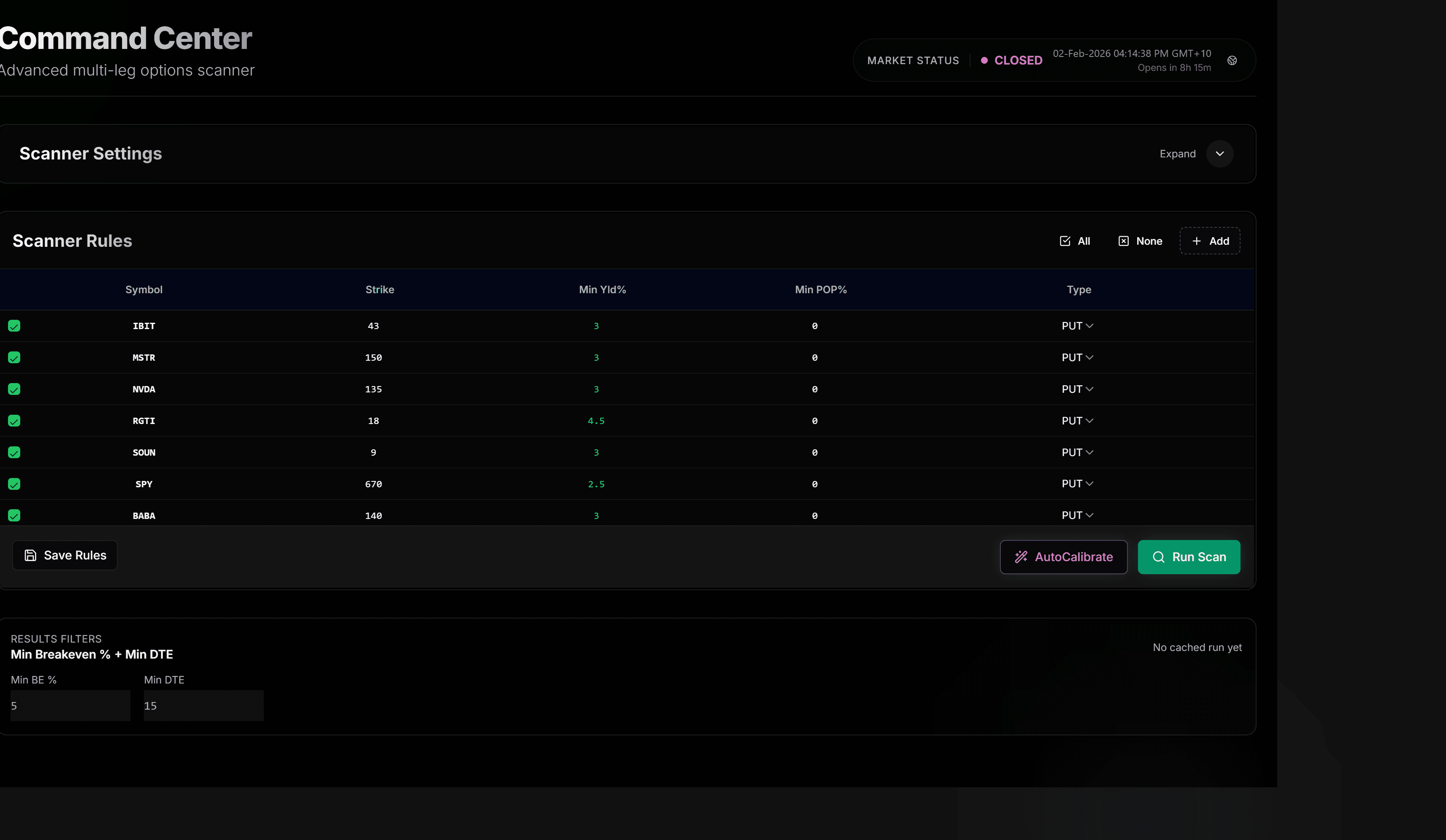
The covered call scanner is built for traders who already own shares and want to compare call candidates against a yield target.
Upside cap awareness
Review premium, strike distance, and upside cap together so you know what income you are giving up before you shortlist the contract.
Position context
Use the scanner with the stock position you already hold, then validate whether the setup fits your portfolio rules and time horizon.
Income framing
Compare monthly yield and assignment risk as a pair instead of looking at premium in isolation.
Find covered calls that fit the shares you already own
Use the scanner to compare call candidates by income, upside cap, assignment context, and portfolio fit before you decide which contract deserves a closer look.
Quick Answers
Short answers for traders balancing income, assignment risk, and upside cap before writing a call.
What makes a covered call scanner useful?Answer
It helps you compare premium, upside cap, strike distance, and assignment context together so you can evaluate income tradeoffs against shares you already own.
Does the scanner work without stock ownership context?Answer
Covered calls make the most sense when tied to an existing position, so the workflow assumes you are reviewing contracts against shares already in the account.
What should I do after screening?Answer
Use the visualizer and workflow pages to confirm payoff behavior, upside tradeoffs, and whether the final call still matches your portfolio rules.
Related Pages
Use these pages to move from screening into setup validation.